

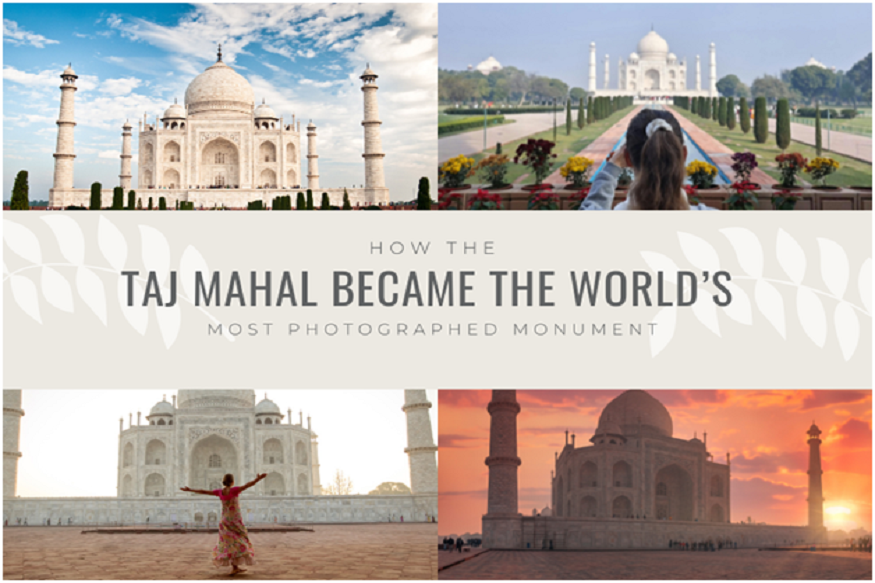
From grainy 19th-century calotypes to billions of Instagram snaps, the TajMahal has ruled the camera lens like no other wonder. Start your own Taj Mahal tour from Delhi to see what the early pioneers first immortalized. . Be it TajMahal travel by train or direct flight, every tourist comes here. This deep dive reveals the timeline, technological leaps, and cultural shifts that led to it being declared the king of clicks.
Early photographers had to contend with India’s heat and long exposures, yet the Taj’s symmetry immediately attracted them. Unlock the frame-worthy mysteries waiting for you on your TajMahal tour from Delhi. We’ll explore the daguerreotype in drones, and show why it’s better than the Eiffel Towers and the Great Walls when it comes to photo counts.
Pioneering Clicks: The Dawn of Taj Photography in the 1850s
Photography came to India in 1839, but the first known photograph of the Taj came in the 1850s through Dr. John Murray, surgeon to the East India Company. Step into his calotype shadow on a modern Taj Mahal tour by train.Using large-scale waxed paper negatives – exposures up to 25 minutes – he captured the glow of the dome, darkening the sky, for an ethereal print now in the Met Museum.
British amateurs such as Robert and Harriet Tytler carried heavy loads to document the symbols of Agra after the rebellion of 1857. Their pioneer plates prove the charm of Taj before pixels in your TajMahal tour from Delhi.
- Tech hurdles: Tropical heat dried chemicals; elephants hauled cameras.
- Visual hooks: Symmetry defied era’s blurry limits.
- Empire fuel: Prints fueled armchair tourism back home.
Victorian era boom: album and panorama
From the 1860s–1880s, studios such as Bourne and Shepherd produced crown albums for the elite. Samuel Bourne trekked the Himalayas but remained focused on Agra, providing a crisp view from his wet-plate collodion. Recapture their epic frames during your quick TajMahal tour by train.
India’s first maestro LalaDeenDayal blended local insight with Western polish – his Taj shots rivaled those of Europeans. The panorama stitched the triptych from the entrances, making the mausoleum infinite. The albums of this era turned the TajMahal Tour of Delhi into a status symbol for world travelers.
Demand for Victorian postcards exploded; Every officer took away the mandatory crown evidence.
The 20th century boom: film, Kodachrome and mass tourism
After World War II, Kodachrome slides saturated colors, depicting hippies through Lonely Planet trails. Live transparency on your TajMahal tour from Delhi foreshadows today’s feed. National Geographic spreads (after the 1930s) romanticized it as the pinnacle of love.
India’s liberalization in the 1980s led to an increase in foreign arrivals; Disposable cameras captured the apparent crowd. The analog magic before the digital was at its peak on the TajMahal tour by train.
- Slide shows: Families projected Taj glows in living rooms.
- Postcard kings: Sold millions, seeding global obsession.
- Film stars: Bollywood frames amplified cinematic appeal.
Digital Revolution: Pixels and Social Media Explosion
DSLRs of the 2000s democratized perfection – Diana’s bench tripod gave rise to the iconic silhouette. Flickr (2004) was the first to match the Taj tag. Join Pixel Pilgrims through an efficient TajMahal tour from Delhi.
Instagram (2010) sparked a frenzy; #TajMahal beats rivals to garner billions of posts in 2020. Influencers chase golden times, drones (bans selectively lifted after 2015) add aerial drama. Social scrolling makes TajMahal travel by train the best bucket-list badge.
Smartphones seal it – iPhone pictures with Night Mode mimic undead skies.
Iconic Angles and Why They Hook Photographers
Symmetry reigns: views from the gardens to the front dome dominate 70% of the images. Master these poses on your TajMahal tour from Delhi for viral gold.
Diana Bench frames the lovers; MehtabBagh reversed for Yamuna reflection. Reflections in fountains double infinity. The Pro approach elevates any TajMahal visit by train snap.
Golden hour: Dawn pinks to dusk golds shift moods hourly.
Wide-angle magic: Minarets lean outward, fooling eyes.
Crowd hacks: East Gate sunrise dodges hordes.
Cultural and Psychological Pulls
Shahjahan’s love story sells romance – the proposals here are extreme. Emotional narratives help visitors to Delhi raise stakes in the TajMahal visit. UNESCO status (1983) gave it the status of photogenic heritage.
Psychology comes into play: the right ratio triggers awe (the golden ratio). The universal beauty transcends cultures on your TajMahal tour by train.
Memes and edits (rainbow crown, Star Wars overlay) virginity-fueled shares.
Tech Evolution Fueling the Frenzy
Algorithms prioritize the Taj—the most searched monument on Google. AI filters enhance the brightness of inlays. Technical routes are shining for seamless TajMahal travel from Delhi.
360° VR tours tease, but nothing beats in-person. Live cam stream sunrise globally.
- Hashtag power: #TajMahal tops travel tags.
- App boosts: Photo editors auto-perfect marble.
- NFT nods: Digital Taj auctions fetch fortunes.
Preservation vs. Popularity: The Photo Paradox
Billions of snaps stress pollution from marble-flash debate. Sustainable clicks on your TajMahal tour by train respect the heritage. Restrictions on tripods indoors protect the pietradura jewels.
Authorities set limits on daily visitors, giving priority to dawn slots. Balancing tourism with timelessness defines the modern TajMahal tour from Delhi.
Conclusion
From Murray’s 1850s plates to TikTok reels, the TajMahal’s photogenic destiny was sealed by symmetry, storytelling and casual technological waves. Your TajMahal tour by train reflects a legacy that no filter can fake. It’s not just photographed – it redefines photography itself, capturing souls around the world. Whether chasing first light or apparent chaos, one click creates eternal wanderlust. Go to Agra, create your chapter and join the world’s most photographed saga.