

A Geography That Resists Acceleration
There are coastlines that invite traversal, their appeal lying in movement, accumulation, and rapid visual consumption. Others resist such treatment, demanding instead a slower, more deliberate engagement. The southeastern edge of Italy belongs to the latter category. Here, the meeting of land and sea is not merely scenic but structurally complex: limestone cliffs fractured by time, narrow inlets shaped by currents, and settlements whose rhythms predate modern tourism. To approach this terrain with haste is to misunderstand both its physical character and its cultural logic.
Approaching the Edge of Salento
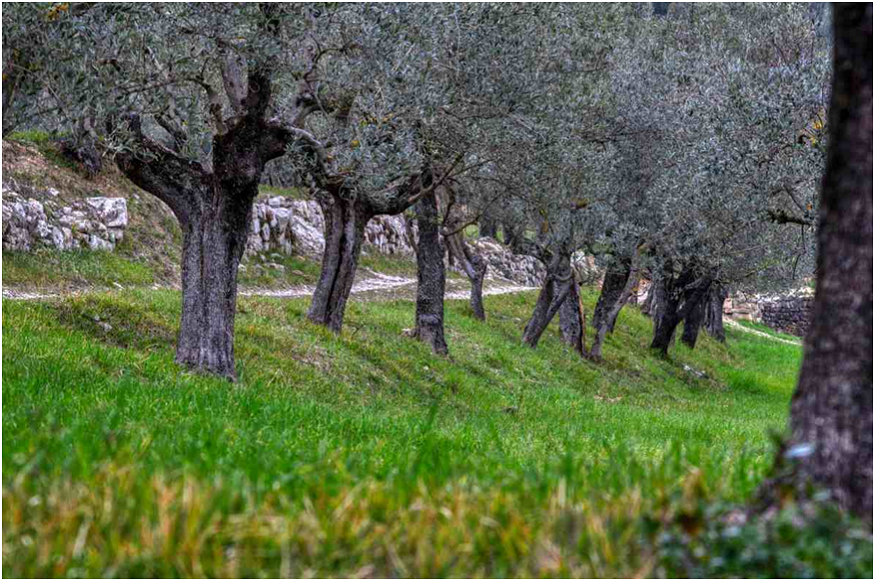
Only gradually does one arrive at Otranto, a town whose position at the easternmost point of Italy is as symbolic as it is geographical. Located along the Adriatic coast of Salento, it stands not as an isolated destination but as a culmination of a wider landscape. The coastal road leading south reveals a sequence of environments—olive groves, dry stone walls, intermittent glimpses of the sea—that prepare the observer for a place where continuity matters more than spectacle. The town itself emerges with restraint: a fortified silhouette, pale stone against a luminous horizon.
Historical Density and Architectural Restraint
Otranto’s historical significance is disproportionate to its modest scale. Its past is marked by episodes of contact and conflict, most notably the Ottoman siege of 1480, an event that continues to inform local identity. Yet the town does not present its history through overt dramatization. Instead, it is embedded in its architecture: the Aragonese Castle, defensive walls, and the Cathedral of Santa Maria Annunziata, whose mosaic floor constitutes one of the most intricate medieval artworks in Italy. These elements require attention rather than announcement. They reward those willing to pause, to observe details, and to situate them within broader historical narratives.
Read More: Southern Italy’s Hidden Gems: Where Beaches,
The Temporal Logic of the Coastline
The coastline surrounding Otranto exemplifies a temporal dimension often overlooked in contemporary travel. Beaches alternate with rocky outcrops, and access points are irregular, discouraging linear exploration. The sea itself varies in color and intensity, influenced by depth, light, and seasonal conditions. Such variability undermines any attempt at standardization. To experience this coast meaningfully is to accept discontinuity: to stop, to retrace steps, to allow for unpredictability. In this sense, the landscape imposes a discipline that contrasts sharply with the efficiency-driven habits of modern itineraries.
Culinary Context and Regional Specificity
An analogous principle applies to the culinary domain. The regional cuisine of Southern Italy is not a monolithic entity but a constellation of localized practices shaped by climate, history, and resource availability. In Otranto, this translates into a cuisine that privileges immediacy and simplicity: freshly caught fish, vegetables cultivated in nearby fields, olive oil produced within a limited radius. Dishes are not designed to impress through complexity but to articulate a relationship between place and sustenance. Understanding this requires more than consumption; it entails recognizing the socio-economic and environmental conditions that sustain such traditions.
Light, Material, and Perception
One of the defining characteristics of Otranto is the quality of light, which interacts with the town’s materials in subtle ways. The local stone, pale and porous, absorbs and reflects sunlight differently throughout the day, altering the perception of space. In the early morning, surfaces appear almost translucent; by midday, they intensify in brightness; toward evening, they acquire a warmer, more subdued tone. This continuous transformation resists photographic capture and instead favors prolonged observation. It reinforces the notion that perception here is temporal, not instantaneous.
Read More: Chasing the Sky: A Himalayan trek EBC trek
Against the Logic of Consumption
To rush through Otranto is to reduce it to a checklist: a castle visited, a cathedral photographed, a meal consumed. Such an approach aligns with a broader logic of cultural consumption that prioritizes quantity over depth. Yet the town’s value lies precisely in its resistance to this logic. Its scale, its historical layers, and its environmental context all encourage a different mode of engagement—one that is slower, more reflective, and less easily quantified. This is not a matter of romanticizing slowness but of recognizing that certain places are structured in ways that make acceleration counterproductive.
A Deliberate Encounter
Otranto exemplifies a category of destinations that cannot be meaningfully experienced through speed. Its geographical position, historical density, and cultural practices converge to create an environment where time functions differently. To engage with it adequately is to accept a recalibration of pace and expectation. In doing so, one does not merely visit a coastal town but enters into a more complex relationship with landscape, history, and perception—one that resists simplification and rewards sustained attention.